 ch
ch English
Machinery manufacturing company from China.
Choose Us, Trust Us!
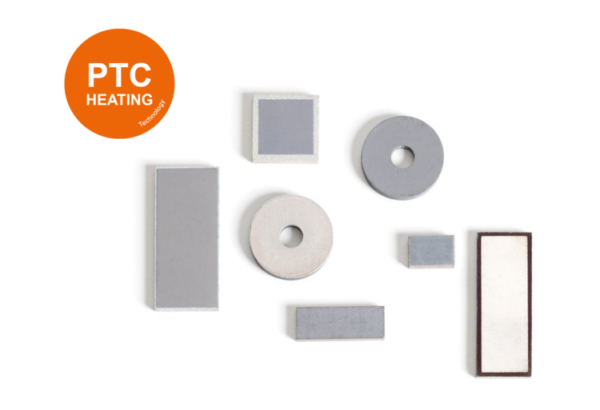
The extreme temperature, humidity, and frost in winter are major challenges for electronic components, especially for outdoor cabinets and electronic cabinets. To prevent system failure or serious damage, an intelligent automatic regulating heater is needed; And Dibica offers a variety of products for you to choose from, specifically designed to solve this problem for you, Keep your cabinet at optimal temperature and humidity. Our heaters can keep your electronic components at the appropriate temperature at all times, At the same time, prevent water vapor from entering the cabinet. In summer, if natural convection is not sufficient to cool the cabinet, semiconductor refrigeration chips (Peltier Thermocooler) are needed to keep the ambient temperature at a low level.
Semiconductors can operate at various voltages within a specific range, for example, most PTC heaters can run at 230V and 400V without any significant changes in power.
Due to Ohm's law, the current for low voltage applications is much higher than for household applications (230V); Therefore, it is important to ensure a sufficiently large wire cross-section.
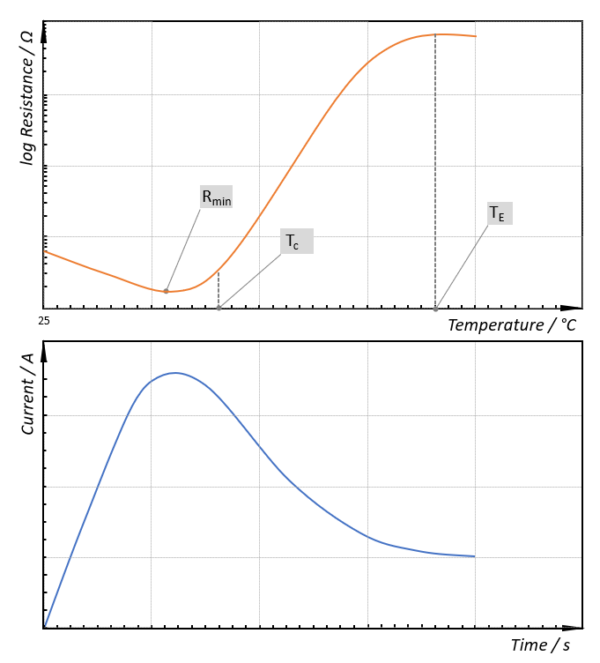
The power output of PTC heating elements depends on how much heat they can absorb. If a large amount of heat is obtained from the semiconductor, it will automatically readjust its temperature and increase power. Once the maximum temperature is reached, the power will decrease again and almost no current will flow. Because it can dynamically self adjust power, PTC heating elements are particularly energy-efficient.
The power of PTC heater depends on two factors: temperature difference dT and heat dissipation surface A. This relationship can be expressed using the formula P=α * A+(dT), where α represents the heat transfer coefficient. The dT of the air heater refers to the temperature difference between the air and the surface of the heater. When the PTC temperature (dT) increases, its power output will also increase accordingly; However, for most applications, we would recommend maintaining a temperature between 180 ° C and 240 ° C. In addition, increasing the area of the heat dissipation surface can also improve performance.
Every time the PTC heater is turned on, there will be a surge current increase for a few seconds, so we recommend using a delay fuse to protect the application system.
Due to the natural resistance of PTC increasing with temperature, temperature self limitation is achieved. Once the highest temperature is reached, the semiconductor becomes non-conductive and settles due to physical effects. Due to this effect, PTC is particularly safe and does not require any additional thermal fuses.